

What If You Could Lock Your Rate Before You Even Find the House?
Here's something most buyers just accept as a rule of the process: you can't lock a rate until you have a signed contract on a specific property. That's how most banks work, and it creates a real problem. Actually, it creates two of them.
The first, and the more urgent one: you're actively house hunting right now. You're putting in offers, you know you're buying soon, and every week you're exposed to whatever the market does next, with no way to protect yourself until you actually get an accepted offer. A rate shift mid-search can undercut you before you've even found the house to lock against.
The second problem is a longer term version of the same thing. Maybe you're not actively shopping yet, but you know with real confidence that you'll be ready in six months or a year. You're finishing a debt payoff, letting a lease run out, or closing in on your down payment. You watch every rate headline with a knot in your stomach, and you've been told there's nothing to do about it until you're under contract.
Both of you have been told the same thing: no address, no lock. That's not actually true anymore.

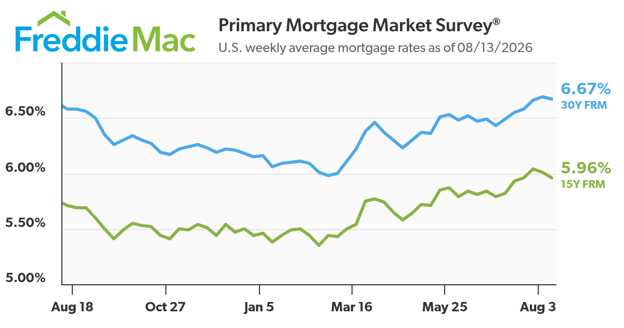
This is exactly the kind of move that makes the fear real, not hypothetical. Freddie Mac's own weekly survey as of 8/13/2026 shows the 30-year fixed rate sitting around 6% back in February, and by mid-August it had climbed to 6.67%. Anyone who was close to ready in February and waited without protection felt that entire swing. You can check where rates stand right now, and see how much they've moved recently, through Freddie Mac's own weekly rate survey.
Whether you're actively bidding or still getting ready, the fear underneath is the same: rates move, and you don't control when. A quarter-point shift could be difference between qualifying and not, between the home you actually want and a smaller budget, between an offer that works and one that suddenly doesn't.
If that's you, there's a tool built for exactly this situation, and almost nobody talks about it.
Imagine calling your buyer with this news:
"Great news—we don't need an appraisal."
No waiting for an appraiser's schedule.
No anxious week wondering whether the home will appraise for the contract price.
No last-minute negotiations because the value came in low.
Just one less obstacle between an accepted offer and the closing table.
For buyers, it's one of the biggest hidden advantages in mortgage lending today. Most stop at the obvious benefit—saving the $600-$900 appraisal fee.
For Realtors, the benefits run much deeper. It includes smoother transactions, happier clients, and fewer surprises.
But the biggest benefit is often something else entirely.
When a traditional appraisal is removed from the equation, the transaction can often move forward much sooner. With one major contingency eliminated, lenders can move more confidently through underwriting. Inspections often become the primary milestone, and title companies can begin the deeper work needed to prepare for closing instead of waiting for the appraisal to be completed.
How many transactions have been delayed because a title issue surfaced only a few days before closing - A lien, an old mortgage release, a probate issue, an heirship problem, a survey question.
Those issues don't get easier because they're discovered later. The sooner they're found, the sooner they're solved.
Yet many appraisal waivers are still overlooked—not because buyers don't qualify, but because many loan officers simply don't look for them. An appraisal waiver doesn't just eliminate an appraisal. It can eliminate the snowball effect, where one delay pushes back the next, and the next, until everyone is scrambling the week before closing.
Banks Hedge. Now You Can Too.
Financial institutions protect themselves from rate movement constantly. It's a normal, unremarkable part of how they operate. What most borrowers don't realize is that a version of that same protection is available to them, if they know to ask for it. It's called Lock and Shop, and the idea is simple: lock in today's rate and pricing before you've even found the house.
Through UWM, the largest wholesale lender in the country and one I work with directly, Lock and Shop is available with terms up to 90, 120, 150, 180, 270, or even 365 days. That last number is worth sitting with: a full year of rate protection, locked in today, while you finish getting ready.
Imagine calling your buyer with this news:
"Great news—we don't need an appraisal."
No waiting for an appraiser's schedule.
No anxious week wondering whether the home will appraise for the contract price.
No last-minute negotiations because the value came in low.
Just one less obstacle between an accepted offer and the closing table.
For buyers, it's one of the biggest hidden advantages in mortgage lending today. Most stop at the obvious benefit—saving the $600-$900 appraisal fee.
For Realtors, the benefits run much deeper. It includes smoother transactions, happier clients, and fewer surprises.
But the biggest benefit is often something else entirely.
When a traditional appraisal is removed from the equation, the transaction can often move forward much sooner. With one major contingency eliminated, lenders can move more confidently through underwriting. Inspections often become the primary milestone, and title companies can begin the deeper work needed to prepare for closing instead of waiting for the appraisal to be completed.
How many transactions have been delayed because a title issue surfaced only a few days before closing - A lien, an old mortgage release, a probate issue, an heirship problem, a survey question.
Those issues don't get easier because they're discovered later. The sooner they're found, the sooner they're solved.
Yet many appraisal waivers are still overlooked—not because buyers don't qualify, but because many loan officers simply don't look for them. An appraisal waiver doesn't just eliminate an appraisal. It can eliminate the snowball effect, where one delay pushes back the next, and the next, until everyone is scrambling the week before closing.
And If Rates Drop Instead? You're Not Stuck.
The obvious question is what happens if you lock in now and rates go the other way. These programs are typically paired with a float-down option. If rates improve while you're shopping, you're not locked out of the better number. You get the protection against the upside risk without giving up the chance at good news. I'd want to walk through the specific float-down terms with you directly once we're looking at your timeline, since the details matter.
Imagine calling your buyer with this news:
"Great news—we don't need an appraisal."
No waiting for an appraiser's schedule.
No anxious week wondering whether the home will appraise for the contract price.
No last-minute negotiations because the value came in low.
Just one less obstacle between an accepted offer and the closing table.
For buyers, it's one of the biggest hidden advantages in mortgage lending today. Most stop at the obvious benefit—saving the $600-$900 appraisal fee.
For Realtors, the benefits run much deeper. It includes smoother transactions, happier clients, and fewer surprises.
But the biggest benefit is often something else entirely.
When a traditional appraisal is removed from the equation, the transaction can often move forward much sooner. With one major contingency eliminated, lenders can move more confidently through underwriting. Inspections often become the primary milestone, and title companies can begin the deeper work needed to prepare for closing instead of waiting for the appraisal to be completed.
How many transactions have been delayed because a title issue surfaced only a few days before closing - A lien, an old mortgage release, a probate issue, an heirship problem, a survey question.
Those issues don't get easier because they're discovered later. The sooner they're found, the sooner they're solved.
Yet many appraisal waivers are still overlooked—not because buyers don't qualify, but because many loan officers simply don't look for them. An appraisal waiver doesn't just eliminate an appraisal. It can eliminate the snowball effect, where one delay pushes back the next, and the next, until everyone is scrambling the week before closing.
The Honest Trade-Off
This isn't free, and I'm not going to pretend it is. Locking in a rate for months before you're under contract typically comes with an upfront cost, the same way any form of hedging does. The question isn't whether it costs something. It's whether the certainty is worth more to you than the cost, given how close you are and how much a rate move could actually cost you if you guessed wrong.
For a lot of buyers, the math isn't close. If you're on the edge of qualifying and a rate increase of even a quarter or half a point could shrink your budget or push you out of range entirely, a known, upfront cost to lock in today's number is often a much smaller risk than an unknown rate six months from now.
Guidelines and cost percentages on programs like this can and do change, so please call to get current figures directly.
Imagine calling your buyer with this news:
"Great news—we don't need an appraisal."
No waiting for an appraiser's schedule.
No anxious week wondering whether the home will appraise for the contract price.
No last-minute negotiations because the value came in low.
Just one less obstacle between an accepted offer and the closing table.
For buyers, it's one of the biggest hidden advantages in mortgage lending today. Most stop at the obvious benefit—saving the $600-$900 appraisal fee.
For Realtors, the benefits run much deeper. It includes smoother transactions, happier clients, and fewer surprises.
But the biggest benefit is often something else entirely.
When a traditional appraisal is removed from the equation, the transaction can often move forward much sooner. With one major contingency eliminated, lenders can move more confidently through underwriting. Inspections often become the primary milestone, and title companies can begin the deeper work needed to prepare for closing instead of waiting for the appraisal to be completed.
How many transactions have been delayed because a title issue surfaced only a few days before closing - A lien, an old mortgage release, a probate issue, an heirship problem, a survey question.
Those issues don't get easier because they're discovered later. The sooner they're found, the sooner they're solved.
Yet many appraisal waivers are still overlooked—not because buyers don't qualify, but because many loan officers simply don't look for them. An appraisal waiver doesn't just eliminate an appraisal. It can eliminate the snowball effect, where one delay pushes back the next, and the next, until everyone is scrambling the week before closing.
Who This Is Actually For
The most urgent fit is the buyer actively in the market right now, already looking, already putting in offers, and knowing without a doubt they're buying soon. A 90-day lock fits that buyer specifically. Not someone waiting to be ready, but someone already exposed to the market who doesn't want a rate shift to undercut an offer they're about to make.
The other group already knows, with real confidence, roughly when they'll be ready. Not "someday," but a specific window driven by something outside their control.
Active-duty military and veterans are often the cleanest fit here. PCS orders are typically issued 60 to 120 days before an actual move, which means a service member frequently knows almost exactly when they'll need to close, on top of a VA loan that already removes the down payment barrier. Medical residents and fellows are another strong example. Match Day happens in March, but the new position doesn't start until July 1, a guaranteed four-month gap between knowing exactly where you're going and needing to be there. Teachers hired in the spring for an August start have a similar predictable runway. And here in Louisiana, energy sector employees transferring between Gulf Coast facilities often know their new assignment well in advance of the actual move date.
In every one of these cases, the buyer isn't guessing about their timeline. They already know it. Lock and Shop is built for exactly that kind of certainty, whether that certainty is measured in weeks or months.
Imagine calling your buyer with this news:
"Great news—we don't need an appraisal."
No waiting for an appraiser's schedule.
No anxious week wondering whether the home will appraise for the contract price.
No last-minute negotiations because the value came in low.
Just one less obstacle between an accepted offer and the closing table.
For buyers, it's one of the biggest hidden advantages in mortgage lending today. Most stop at the obvious benefit—saving the $600-$900 appraisal fee.
For Realtors, the benefits run much deeper. It includes smoother transactions, happier clients, and fewer surprises.
But the biggest benefit is often something else entirely.
When a traditional appraisal is removed from the equation, the transaction can often move forward much sooner. With one major contingency eliminated, lenders can move more confidently through underwriting. Inspections often become the primary milestone, and title companies can begin the deeper work needed to prepare for closing instead of waiting for the appraisal to be completed.
How many transactions have been delayed because a title issue surfaced only a few days before closing - A lien, an old mortgage release, a probate issue, an heirship problem, a survey question.
Those issues don't get easier because they're discovered later. The sooner they're found, the sooner they're solved.
Yet many appraisal waivers are still overlooked—not because buyers don't qualify, but because many loan officers simply don't look for them. An appraisal waiver doesn't just eliminate an appraisal. It can eliminate the snowball effect, where one delay pushes back the next, and the next, until everyone is scrambling the week before closing.
If This Is You
You don't have to keep watching the market and hoping. If you know you're getting close, even if you're not ready today, let's talk about whether locking in now makes sense for your specific timeline. I'll walk you through the real numbers, not just the concept, so you can decide with your eyes open.
Call me at (504) 214-8402.
Imagine calling your buyer with this news:
"Great news—we don't need an appraisal."
No waiting for an appraiser's schedule.
No anxious week wondering whether the home will appraise for the contract price.
No last-minute negotiations because the value came in low.
Just one less obstacle between an accepted offer and the closing table.
For buyers, it's one of the biggest hidden advantages in mortgage lending today. Most stop at the obvious benefit—saving the $600-$900 appraisal fee.
For Realtors, the benefits run much deeper. It includes smoother transactions, happier clients, and fewer surprises.
But the biggest benefit is often something else entirely.
When a traditional appraisal is removed from the equation, the transaction can often move forward much sooner. With one major contingency eliminated, lenders can move more confidently through underwriting. Inspections often become the primary milestone, and title companies can begin the deeper work needed to prepare for closing instead of waiting for the appraisal to be completed.
How many transactions have been delayed because a title issue surfaced only a few days before closing - A lien, an old mortgage release, a probate issue, an heirship problem, a survey question.
Those issues don't get easier because they're discovered later. The sooner they're found, the sooner they're solved.
Yet many appraisal waivers are still overlooked—not because buyers don't qualify, but because many loan officers simply don't look for them. An appraisal waiver doesn't just eliminate an appraisal. It can eliminate the snowball effect, where one delay pushes back the next, and the next, until everyone is scrambling the week before closing.
Bernard Guste - Mortgage Loan Originator, NMLS #79676. Equal Housing Lender. Lock and Shop program availability, terms, pricing, and float-down eligibility vary by loan program and are subject to underwriting approval. Learn more about UWM at
uwm.com.